Picturing the Future of Europe's Farmland: LAFERIA Scenarios Put to the Test at the iDiv Conference
What might Europe's intensive agricultural landscapes look like if landscape features were brought back? On 9 September 2026, LAFERIA put three possible answers in front of fellow scientists at the conference of the German Centre for Integrative Biodiversity Research (iDiv) at Jena University, Germany.
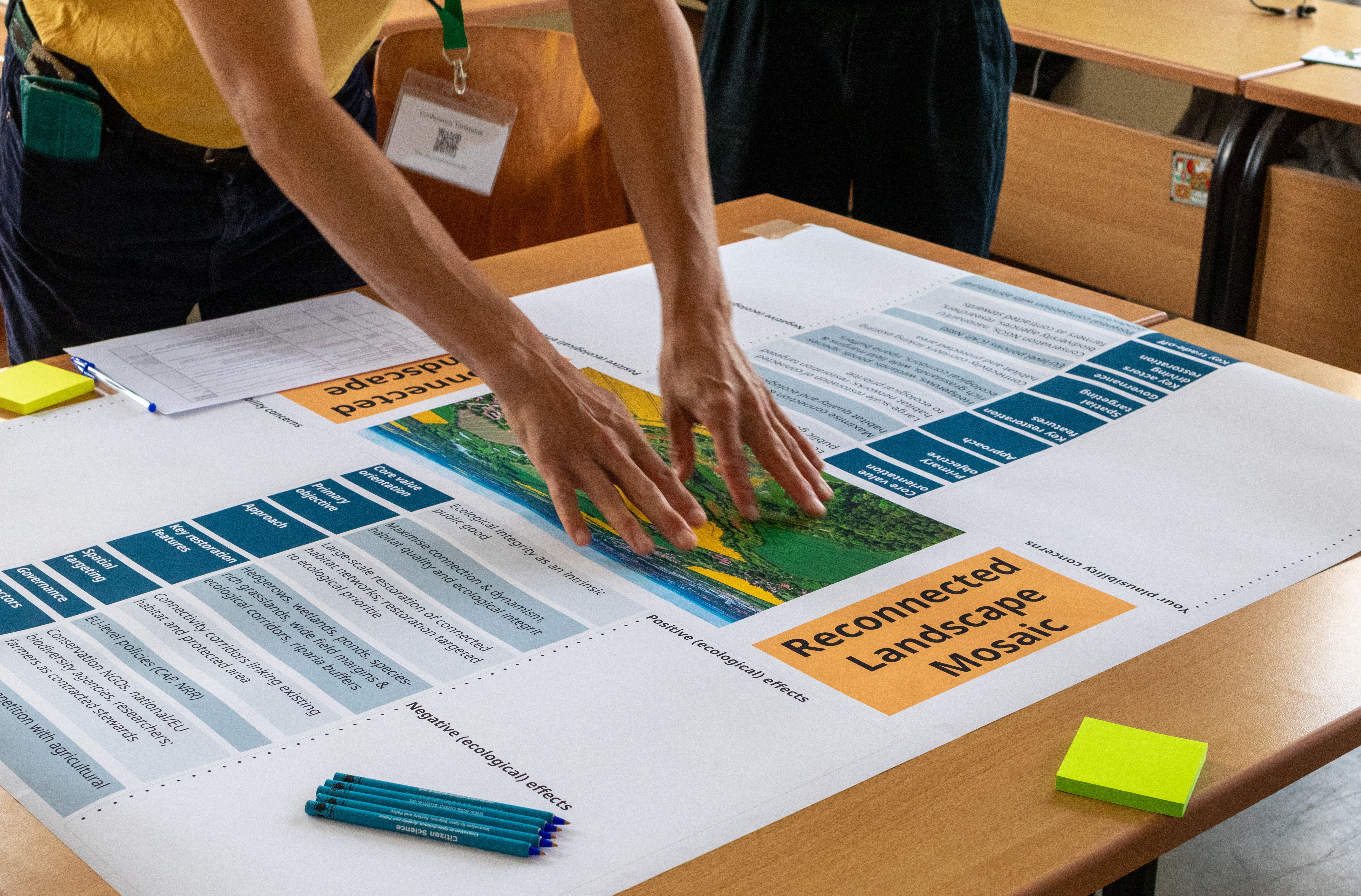
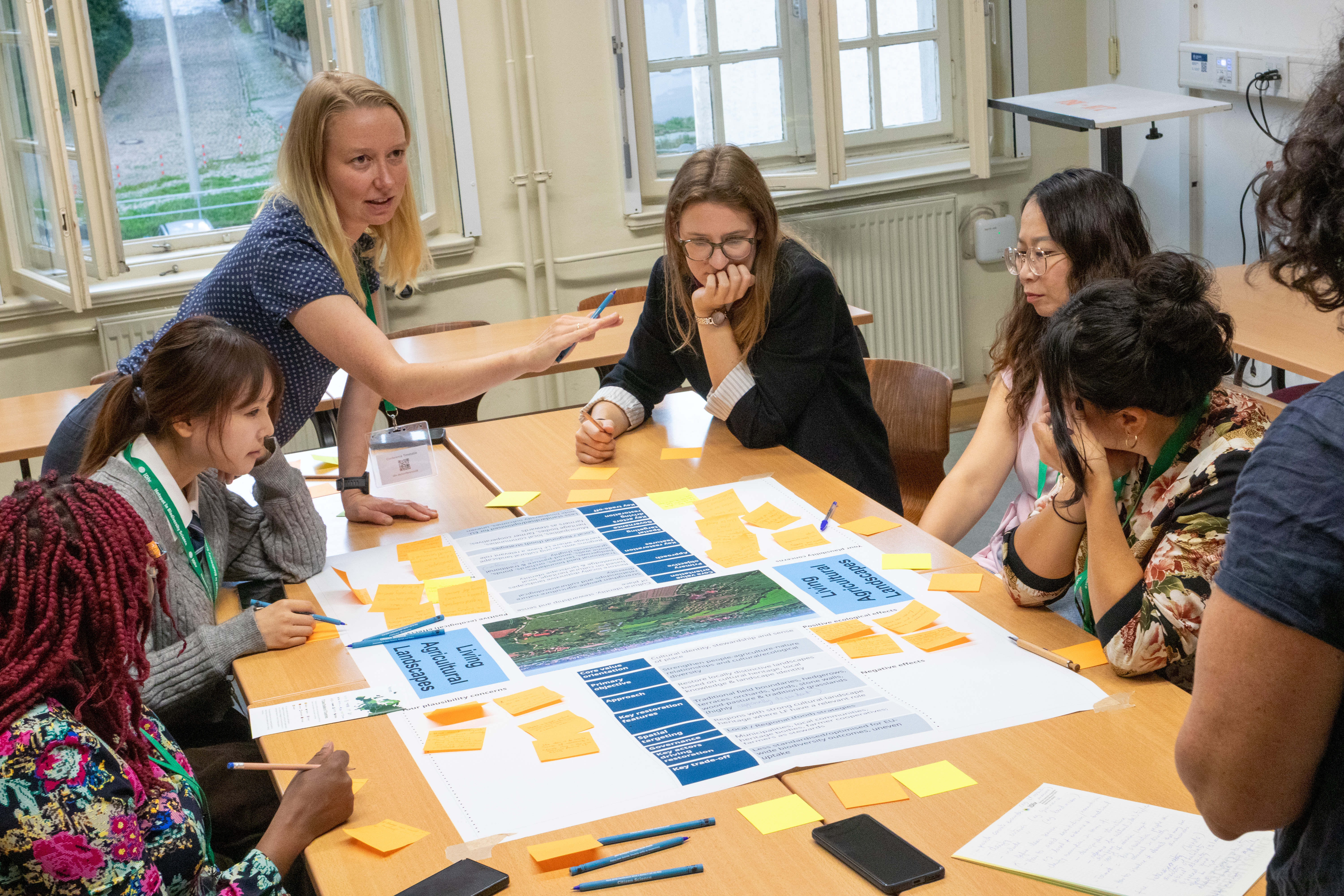
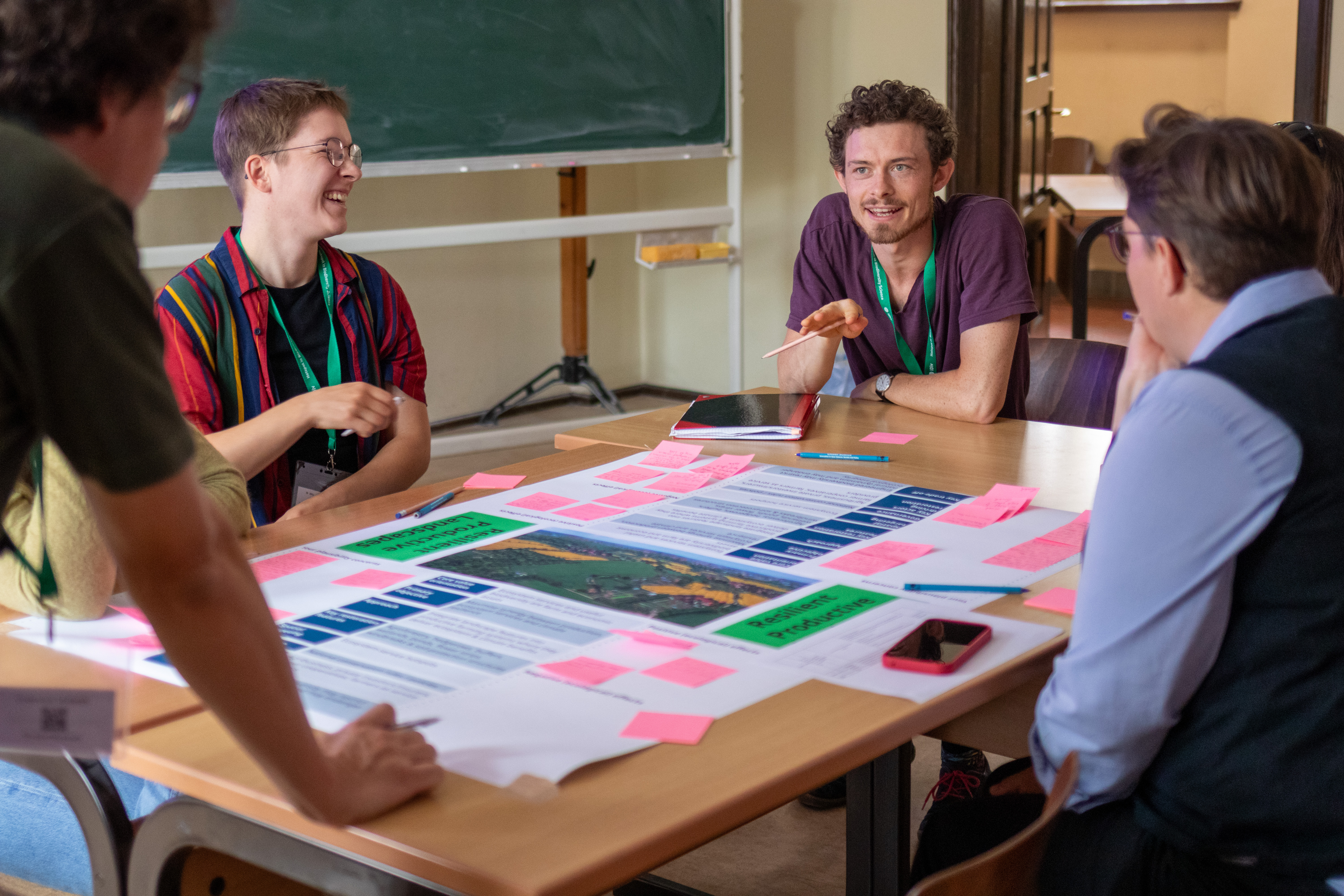
A. Cristina de la Vega-Leinert from the Helmholtz Centre for Environmental Research (UFZ) led the session Co-developing and evaluating scenarios for restoring landscape elements in agricultural regions across Europe. It combined a presentation of LAFERIA's approach to participatory scenario development, including three preliminary scenario narratives and their visualisations, with a workshop where around 25 researchers discussed and evaluated them.
Exploring possible futures, together
Participatory scenario development means building pictures of possible futures together with the people they concern, rather than for them. LAFERIA's three preliminary narratives explore different futures for restoring landscape features in intensive agricultural landscapes.
Each narrative comes with visualisations that make possible future landscapes more tangible. Instead of abstract descriptions, audiences get something concrete to look at, question and react to.
Scenarios, not predictions
The workshop was also a test run. The scenarios were introduced, discussed and evaluated with the audience, checking how clear and relevant the narratives and visualisations are.
The audience engaged constructively, offering comments and suggestions that showed interest in the topic and in the potential of visual scenarios to spark discussion. The exchange also underlined the value of bringing different perspectives into scenario development for complex sustainability challenges.
One message was central: the scenarios are not forecasts or ready-made recommendations. They are exploratory tools, designed to open up conversations about alternative futures rather than predict what will happen.
The team is also tackling a second challenge: translating the ecological, economic and social complexity of landscape-feature restoration into stories and images that are both scientifically meaningful and accessible to different audiences.
What comes next
The feedback gathered at the conference will help refine the scenarios ahead of further development and engagement with local stakeholders. In the longer term, the scenarios can help communicate the potential benefits and trade-offs of restoring landscape features to farmers, land managers and other local actors.